I love the idea that every myth had to start somewhere.
Whether we’re talking ancient mythology, cryptids, folklore, conspiracy theories, or urban legends, they all began with something. A tiny kernel of truth. Something real enough to lodge in the human imagination. It made sense to the people of the time, at least those close enough to understand what actually happened.
But over time…
Through retellings, translations, cultural drift, politics, and religion, the story mutated into something unfettered by reality.
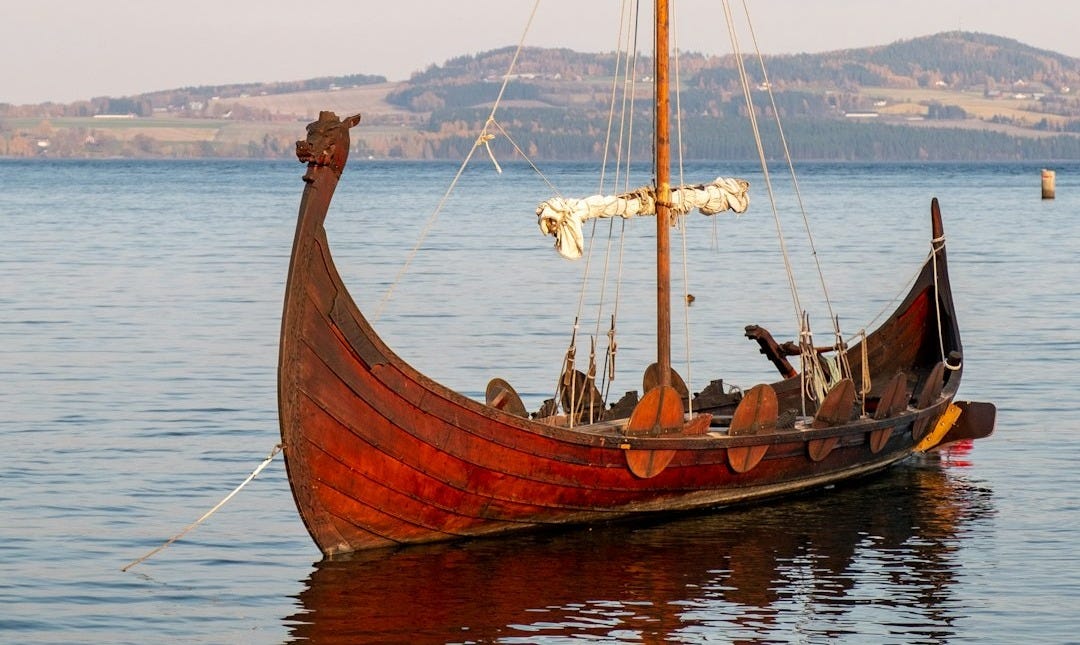
A great example of this is Michael Crichton’s classic novel Eaters of the Dead, made into the wonderful Antonio Banderas movie “The 13th Warrior.” In it, Arab scribe Ahmad Ibn Fadlan is sent as an ambassador to the King of the Bulgars, only to spend three years actually embedded with a company of Norsemen. The story he tells when he returns recounts a great struggle between the Norse chieftain and a mysterious threat to their settlement. The story is grounded, plausible and while exciting, eminently understandable.
Then you also realize how over centuries of retellings, often verbal retellings over mugs of mead, it became the Epic of Beowulf.
That lights up my brain.
Not because I think every myth has a clean one-to-one explanation. I don’t think that every flood myth proves a single global flood, or that every monster story maps neatly onto a bear seen in bad lighting. Sometimes myths are symbolic. Sometimes they are psychological. Sometimes they are political propaganda wearing a monster suit.
But I do think myths often preserve data after they’ve lost their methodology.
Something happened. Someone saw something. Someone survived something. Someone needed to explain something. But the original context got stripped away. The observation remained, while the tools for understanding it disappeared.
I think myth is what happens when the vibes outlive the facts.
Because humans are built for story. It’s how we process the world. Remember the WKRP episode where Venus taught a troubled teen about the atom by telling him a story about two gangs in a round neighborhood? That worked because it gave structure to abstraction. It turned information into something the brain understands.
We need a narrative to make sense of life. But the thing about story is, it’s lossy compression. Every narrator emphasizes something different, something unique to the audience. Every generation sands down details they no longer understand, or see as important. They add details that make emotional sense to them, in their time, in their culture.
Myths are old JPEGs, full of errors. But that doesn’t make them useless. It makes them fascinating. Because somewhere inside that compression damage, there may still be a shape. A signal. A fossilized observation. A weather event. A disease. A predator. A migration. A technological encounter. A social trauma. A memory of something that mattered enough to survive long after the facts became unrecognizable.
So when I see a compelling myth, the first thing I ask is:
“Yeah, but what really happened?”
Not because I want to debunk it. Debunking is boring. Debunking usually just takes the toy apart and leaves the pieces on the floor.
I want to understand the machinery underneath the wonder. I want to know what real human experience threw a shadow large enough to become a god, a monster, a miracle, or a warning.
I want to find the truth.